
"Islamic coffee"
500 article(s) found

History and Origin of Coffee Trees
It wasn't until around the 11th century that people started brewing coffee as a drink. In the 13th century, Ethiopian troops invaded Yemen, bringing coffee to the Arab world. Because Islam prohibits believers from drinking alcohol, some religious people believe that this drink stimulates nerves and violates the doctrine. Coffee shops were once banned and closed, but Egypt's Sultan believes that coffee does not violate the doctrine.

The ancient culture and industrial development of coffee beans
In ancient times, when people ate coffee, they often ground the coffee beans directly, and then mixed them with animal fat to eat them. After eating them, people would feel much more energetic than before. Coffee has become one of the most popular beverages nowadays. With the development of coffee industry, coffee culture has also attracted people's attention. In ancient times, people ate coffee

Looking for Coffee: a long Journey Coffee Culture History
In the early days when coffee was introduced into Europe, most people used traditional dripping or distillation to make coffee. There was no Italian coffee at that time, but coffee went deep into every family and became the best drink in daily life. At the beginning of the 20th century, an impatient engineer in a coffee shop near Napoli, Italy, was impatient with dripping coffee for too long.

Boutique coffee, common sense, Turkish coffee.
Coffee in the ancient Middle East, like the legend of 1001 nights, like a veiled girl with a thousand faces, can not only help get close to God, but also wash the spring of sadness. When it comes to coffee, we have to mention Turkish coffee in the Middle East, because no matter from the perspective of Islam or Christianity, the origin of coffee is in the remote and mysterious Middle East. In the thirteenth to fifteenth centuries, it grew.

Turkish coffee that captures the hearts of the people
Coffee in the ancient Middle East, like the legend of 1001 nights, like a veiled girl with a thousand faces, can not only help get close to God, but also wash the spring of sadness. When it comes to coffee, we have to mention Turkish coffee in the Middle East, because no matter from the perspective of Islam or Christianity, the origin of coffee is in the remote and mysterious Middle East. In the thirteenth to fifteenth centuries, it grew.

Coffee Common sense: the spread of Coffee
People think that Africa is the hometown of coffee. But coffee actually originated in Ethiopia and spread around the world through the Yemeni port of Mocha.
Coffee gives birth to coffee culture, coffee purchase price, coffee bean market.
After 1615, Pennesia began to spread coffee to the whole of Europe. Of course, the strong heat of the land stock set off friction in various places. In Rome also caused Islamic drinks to bring to Christians to drink, agree or not two wealth. Although Clement VIII, the king of France at that time, was a devil's drink, it was so delicious. It's a pity to leave this drink to the heathen. So I accepted the coffee and let me come.
Do you know the origin of coffee?
Around the sixth century AD, legend has it that Kaldi, a shepherd on the Ethiopian highlands of Africa, discovered on many occasions that his flock would involuntarily get excited and even make a crazy noise every time they ate the fruit of a wild shrub.

Have you ever had coffee é Touba from Senegal? The origin of coffee é Touba
Professional coffee knowledge exchange more coffee bean information please follow the coffee workshop (Wechat official account cafe_style) Senegal's CafTouba coffee have you tried it? The origin of CafTouba coffee CafTouba coffee drink is Senegal, recently a popular traditional drink in Guinea-Bissau, named after the city of Tuba, Senegal. CafTouba is a coffee drink.
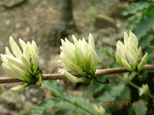
A detailed analysis of the whole process of a coffee from coffee seed to coffee tree and then to coffee bean picking
The first people to drink coffee lived in Ethiopia. A drink called Buncham was found in the Arab scientific literature of 900-1000 AD, but it is not certain that it is coffee. These documents mainly record the scientific value of this bean called Buncham. In addition to introducing the protective effects of this drink on the stomach, organs and skin, the author also mentioned that it can make

Coffee ban in History Coffee Culture History
Although coffee has become a necessity of people's life, no one would think that coffee is harmful to the human body, but in history, coffee was regarded as the embodiment of the devil. Let's take a look at the tragic fate of coffee at different historical stages in different countries. 1. Mecca (Saudi Arabia) the ruler of Mecca banned people from drinking coffee in 1511. The authorities believe that drinking coffee will make people do it.

Introduction to the taste of varieties in Tanzania coffee flavor description method
On January 12, 1964, the Sang people overthrew the sultan and founded the Zanzibar people's Republic. Tanganyika and Zanzibar formed a United Republic on April 26, 1964. On October 29 of the same year, the name of the country was changed to the United Republic of Tanzania. Julius Cambara Ginerere was the founding president and was re-elected twice until he resigned voluntarily in 1985. Mwinyi was elected on October 27th of the same year.

Did you know that delicious coffee was banned once?
Although coffee has become a necessity of people's life, no one would think that coffee is harmful to the human body, but in history, coffee was regarded as the embodiment of the devil. Let's take a look at the tragic fate of coffee at different historical stages in different countries. 1. Mecca (Saudi Arabia) the ruler of Mecca banned people from drinking coffee in 1511. The authorities believe that drinking coffee will make people do it.

Coffee culture common sense skillfully seizes the popular Turkish coffee
Coffee in the ancient Middle East, like a legendary myth in the Thousand and One Nights, like a veiled girl with a thousand faces, can help to get close to God, but also to wash away sadness. Speaking of coffee, you can't mention Turkish coffee in the Middle East, because whether from the Muslim or Christian standpoint, coffee originated in the distant and mysterious Middle East. 13th to 15th century, in the long
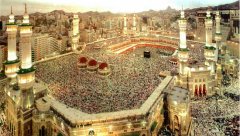
Do you know anything about coffee bans in history?
Although coffee has become a necessity of people's life, no one would think that coffee is harmful to the human body, but in history, coffee was regarded as the embodiment of the devil. Let's take a look at the tragic fate of coffee at different historical stages in different countries. 1. Mecca (Saudi Arabia) the ruler of Mecca banned people from drinking coffee in 1511. The authorities believe that drinking coffee will make people do it.

Introduction to the flavor and taste of coffee manor in Arabica, Ethiopia
Arabica is deeply loved by Chinese people with a short history of coffee contact because of its strong fruity aroma. it was introduced to China by missionaries in the 19th century and was widely planted in Panzhihua, Sichuan, and the dry-hot valley of the Jinsha River in western Yunnan, where the sunshine was long and there was a big temperature difference between day and night. The local people solved the problem of insufficient seasonal rainfall by diverting water up the mountain.

What are the legends about the origin of coffee? which country started to produce coffee first?
According to what we have learned from textbooks today, at first the aborigines of the Ethiopian plateau of Africa tried to chew ground coffee beans to treat stomach problems. It was not until the 13th century that the aroma of roasted coffee beans gradually blew down from the vast African plateau, went on an expedition to Arabia, and quickly captivated people and became a typical drink in the Arab world. About coffee.

Indonesian Muslim groups call for a boycott of Starbucks: because of its support for homosexuality
Professional baristas please follow the coffee workshop (Wechat official account cafe_style) if Starbucks is just doing business, of course, but don't bring ideology here. Anwar Abbas, a member of the Central Council of Muhammad, Indonesia's second largest Muslim organization, said in an interview with Reuters on July 1. In 2013, Starbucks Chairman Schultz expressed support for the same sex.

Ethiopian Coffee Diffusion Coffee beans Belt and Road Ethiopian Coffee and Kenyan Coffee Zone
Professional coffee knowledge exchange more coffee bean information please follow the coffee workshop (Wechat official account cafe_style)

Turkish coffee that captures the hearts and minds of coffee culture
Coffee in the ancient Middle East, like the legend of 1001 nights, like a veiled girl with a thousand faces, can not only help get close to God, but also wash the spring of sadness. When it comes to coffee, we have to mention Turkish coffee in the Middle East, because no matter from the perspective of Islam or Christianity, the origin of coffee is in the remote and mysterious Middle East. In the thirteenth to fifteenth centuries, it grew.